

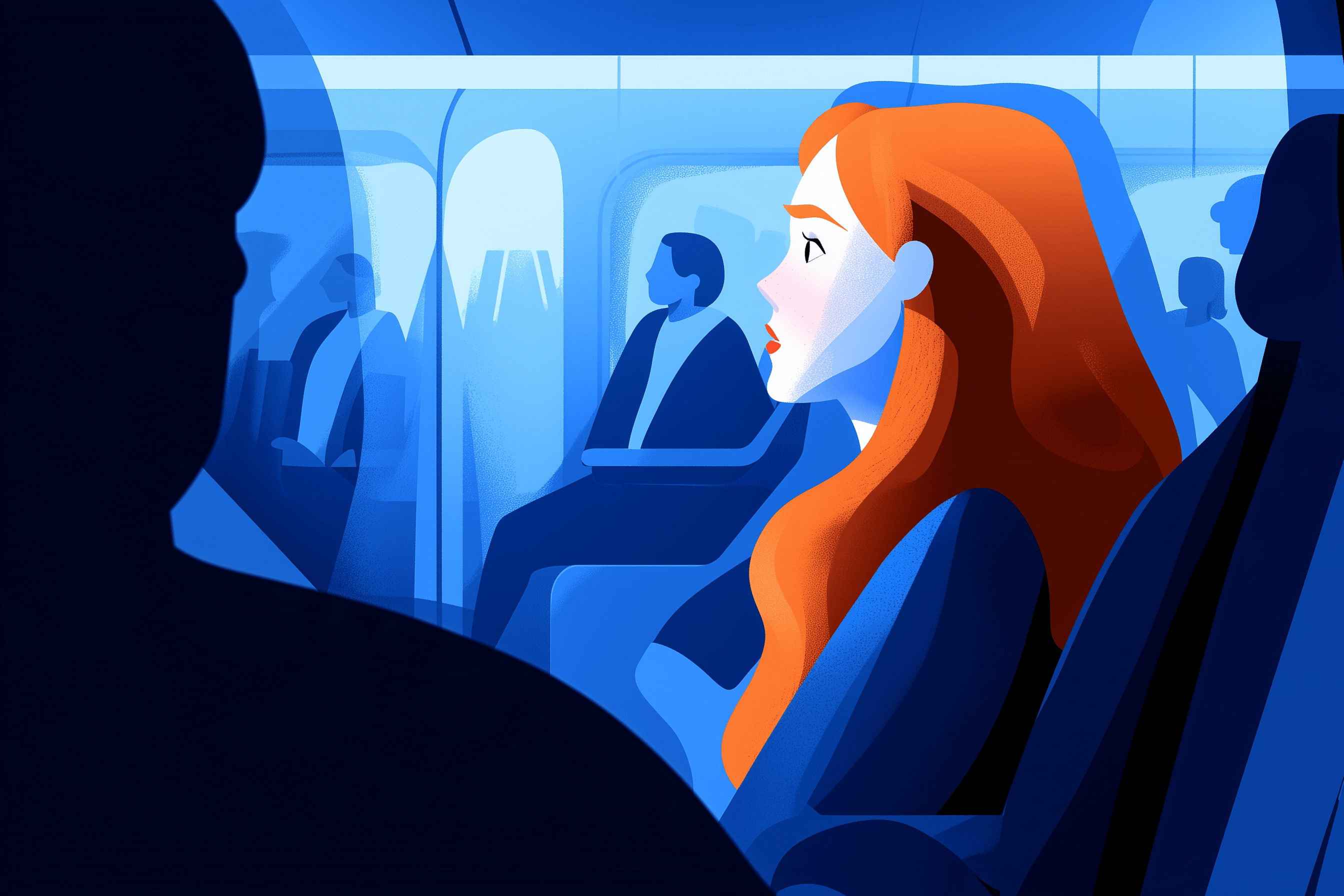
Imagine riding Chicago’s Blue Line home after work. The train is clattering through the city, buildings and lights racing past the windows. Perhaps the car is crowded. You are thinking about dinner, tomorrow’s schedule, or nothing in particular.
Then your heart begins to race.
You feel hot. There is a strange pressure in your chest. Your breathing changes. Maybe you feel lightheaded. Suddenly, and for no apparent reason, you have the overwhelming sensation that something is terribly wrong.
Am I having a heart attack?
Within minutes, what had been an ordinary train ride has become a medical emergency—at least as far as your brain and body are concerned.
Welcome to the peculiar and terrifying experience of a panic attack.
When the Body Sounds an Alarm
Panic attacks are remarkable because the physical experience is so convincing. Symptoms may include a pounding or racing heart, sweating, trembling, shortness of breath, dizziness, nausea, chest discomfort, hot flashes, tingling sensations, and an intense feeling of impending doom.
These aren’t imaginary symptoms. Your heart really is beating faster. Your autonomic nervous system really has shifted into an alarm state.
The mistake is not in what your body is experiencing. The mistake is in what the brain concludes those sensations mean.
A rapid heartbeat becomes my heart is failing. Lightheadedness becomes I’m going to pass out. Chest tightness becomes I’m having a heart attack. And the thought that something catastrophic is happening produces still more adrenaline, which intensifies the physical sensations.
A feedback loop has begun.
Why the Blue Line?
A panic attack can occur almost anywhere—including while sitting quietly at home or even during sleep. But public transportation provides an interesting setting in which to understand panic.
A moving elevated train can present the brain with a remarkable amount of stimulation: noise, vibration, movement, rapidly changing visual scenery, strangers nearby, and the awareness that you cannot simply step outside whenever you choose.
For someone vulnerable to panic, that sensory environment may become overwhelming. A minor bodily sensation gets noticed. Attention turns inward. The heart seems unusually prominent. Breathing feels different.
Then comes the crucial thought:
Something is happening to me, and I can’t get out of here.
The train itself isn’t necessarily causing the panic attack. Rather, the environment may amplify bodily sensations and the person’s interpretation of them.
Why the First Panic Attack Often Ends in the ER
There is another important reason panic attacks become medical emergencies: they resemble medical emergencies.
Someone experiencing a first attack has no reason to recognize what is happening. A racing heart, chest discomfort, sweating, shortness of breath, dizziness, and fear of imminent death can occur with panic—but some of these symptoms can also accompany cardiac arrhythmias, heart attacks, and other medical conditions.
So the person gets off the train. Someone calls 911. An ambulance arrives. Or a frightened spouse or friend drives them to a Chicago emergency department.
That is not necessarily an overreaction. New or unexplained chest pain and related symptoms sometimes require urgent medical assessment. A person should not simply assume that chest pain is “only anxiety,” particularly when symptoms are new, severe, persistent, or accompanied by other concerning features.
Frequently, however, the evaluation is reassuring. The ECG is normal. Cardiac testing is negative. Vital signs settle down. Eventually someone says, “You may have had a panic attack.”
The Strange Power of Impending Doom
Perhaps the most fascinating symptom of panic is one that is difficult to describe until you have experienced it: the sense of impending doom.
The person doesn’t merely think, I’m anxious.
The experience can be closer to: I’m dying.
That distinction helps explain why reassurance can be so ineffective during an attack. The rational brain may know that panic is harmless, while a much more primitive alarm system is screaming the opposite message.
Even people who understand panic attacks can find themselves briefly persuaded by their own physiology. Knowledge helps, but it doesn’t necessarily switch off the alarm.
A Panic Attack Is Not Necessarily Panic Disorder
An isolated panic attack does not mean someone has panic disorder. Panic attacks can occur occasionally and in association with other psychiatric or medical conditions.
Panic disorder involves recurrent, unexpected attacks accompanied by persistent concern about additional attacks or behavioral changes intended to prevent them.
That second part can become particularly disabling.
After an attack on the Blue Line, for example, someone may stop taking the train. Then perhaps they avoid elevators, airplanes, crowded theaters, or situations where escape feels difficult. Their world gradually becomes smaller—not because those places are dangerous, but because they fear
experiencing panic while there.
Panic Disorder Is Treatable
The encouraging part of this story is that panic disorder is highly treatable.
Psychotherapy—particularly cognitive behavioral approaches that address catastrophic interpretations of bodily sensations—can be very effective. Interoceptive exposure can help patients deliberately experience harmless sensations such as an elevated heart rate and learn that these sensations do not inevitably signal catastrophe. Medication can also be useful in selected patients.
One of the central therapeutic tasks is deceptively simple: learning to recognize an alarm without automatically believing the alarm.
Your heart can race.
Your body can feel strange.
Your brain can shout, Something terrible is happening.
And sometimes, after appropriate medical causes have been excluded, the most important realization is this:
The alarm is real. The danger isn’t.
The clinical distinction in the draft is important: NIMH distinguishes an isolated panic attack from panic disorder, which requires recurrent unexpected attacks plus persistent worry or behavioral change. (National Institute of Mental Health) The ER language is also intentionally cautious; the American Heart Association recommends urgent evaluation for acute chest pain because potentially serious cardiac symptoms cannot reliably be dismissed as anxiety on symptoms alone. (professional.heart.org)
I would also consider an SEO subtitle such as “Panic Attack or Heart Attack? Understanding Panic Disorder in Chicago” and keywords including panic attack Chicago, panic disorder Chicago, psychiatrist Chicago, panic attack symptoms, and panic attack vs heart attack.