

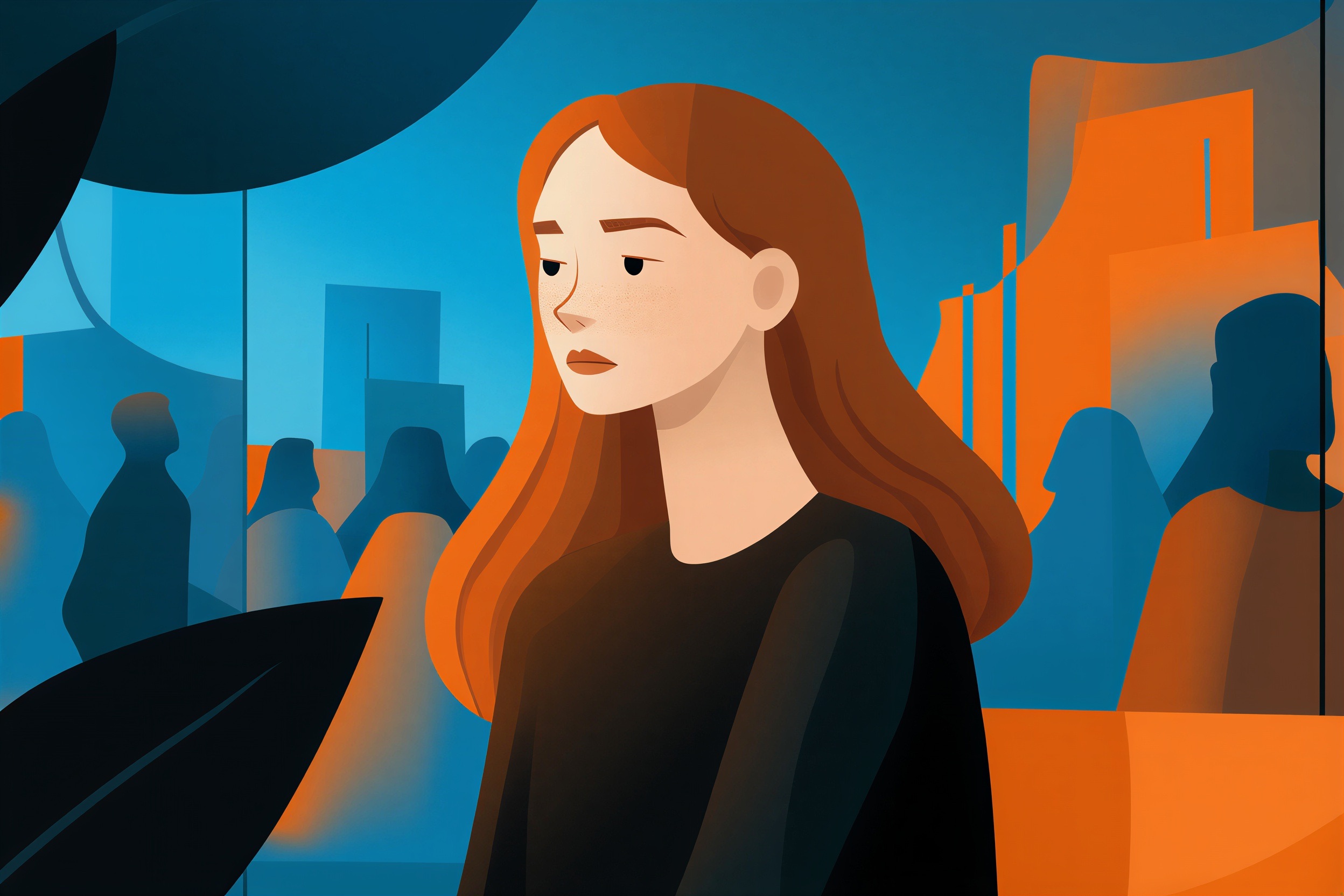
If you live in a city, you’re rarely by yourself. There are people on the sidewalk, on the train, in the elevator, in the café line. Notifications buzz, emails pile up, group chats never sleep. And yet many people I meet in my practice say some version of the same thing: “I’m surrounded by people, but I feel deeply alone—and exhausted by it.”
This experience has a name many people intuitively recognize: social battery drain.
Social battery drain isn’t simply introversion or social anxiety, though it can overlap with both. It’s the sense that constant low-level social exposure—being seen, navigated around, responded to—slowly depletes your emotional and mental energy without giving much back. In cities, this can happen even if you don’t have many meaningful conversations in a day. Just existing among others requires effort.
Urban life asks a lot of our nervous systems. You’re processing noise, movement, crowds, micro-interactions, and subtle social rules all day long. Do I make eye contact? Do I move faster? Is this person annoyed? Did I respond quickly enough? None of this is dramatic, but it’s relentless. Over time, it can leave you feeling wrung out and oddly invisible at the same time.
Loneliness in cities often surprises people because it doesn’t look like isolation. You may have coworkers, acquaintances, neighbors, even a packed social calendar—and still feel emotionally disconnected. That’s because loneliness isn’t about the number of people around you; it’s about felt connection. Without spaces where you can be fully yourself—unmasked, unhurried, not performing—your social battery drains faster than it recharges.
Another piece many people don’t expect is how comparison intensifies this drain. Cities are dense with curated lives: people who look busy, successful, attractive, socially fulfilled. Even when you know these impressions are incomplete, they can quietly activate self-judgment. Why does everyone else seem to be doing this better than me? That internal dialogue is exhausting, and it often runs in the background without being noticed.
Social battery drain can show up emotionally and physically. You might notice irritability, numbness, or a desire to withdraw even from people you care about. You may cancel plans not because you don’t want connection, but because connection feels like more work than you can manage. Some people describe a sense of guilt—I live in this amazing city, why do I feel so flat?—which only adds another layer of strain.
Importantly, this isn’t a personal failure or a flaw in your personality. It’s a mismatch between human needs and an environment that is stimulating but not always nourishing. Humans evolved for smaller social groups with clearer roles and deeper bonds. Modern city life offers constant contact without containment.
So what helps?
First, it can be surprisingly relieving to name the experience. Realizing that your exhaustion makes sense can reduce the shame many people carry. Second, it’s worth distinguishing between stimulating social time and restorative social time. Not all connection replenishes energy equally. One quiet conversation where you feel understood may do more for your nervous system than a week of polite interactions.
Third, boundaries matter—even subtle ones. This might mean building in pockets of intentional solitude, limiting passive social exposure (like scrolling), or giving yourself permission to opt out without over-explaining. Rest is not avoidance when it’s chosen deliberately.
Finally, therapy can be a place to explore what kind of connection actually refuels you, rather than what you think should. Many people discover that their loneliness isn’t about needing more people, but about needing safer, deeper, more attuned relationships—including a kinder relationship with themselves.
If city life has left you feeling depleted, disconnected, or quietly overwhelmed, you’re not alone in that experience—even if it feels that way. Social battery drain is real, understandable, and workable. With the right support, it’s possible to live in a crowded place and still feel grounded, connected, and emotionally alive.