

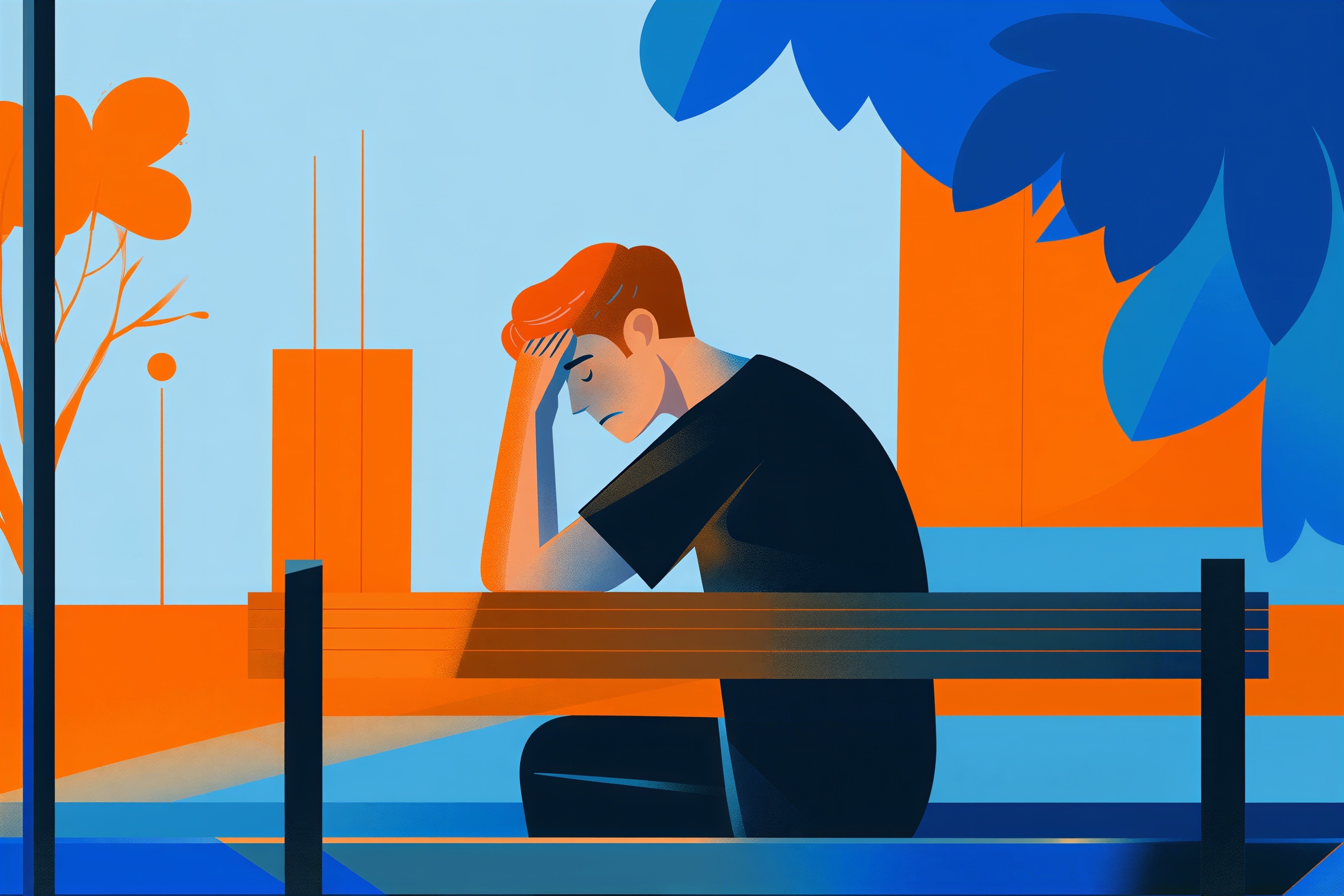
We live in an era of unprecedented physical safety, yet we are haunted by a pervasive sense of peril. As a psychiatrist and psychoanalyst for over forty years, I have listened to thousands of patients describe a peculiar modern ache: the feeling of being “on edge” while sitting on a comfortable sofa in a locked house. Their lives, on paper, are quiet. Their brains, however, are screaming.
To understand this, we must look at a specific neurological circuit: the Default Mode Network (DMN).
The Sentinel That Never Sleeps
The DMN is the brain’s “background noise.” It is most active when we are not focused on a specific task—when we are daydreaming, reflecting on the past, or imagining the future. In a state of nature, this network served as a vital sentinel, scanning for metaphorical shadows in the tall grass.
However, in the modern landscape, this scanning mechanism has become decoupled from actual physical threat. For many, the DMN has evolved into a “chronic alert system.” Even when your environment is serene, your brain is performing a high-speed search for risk. This isn’t just “stress”; it is a functional misalignment where the brain’s internal thermostat is set to “survival” while the body is trying to rest.
The Smoldering Social Disorder
We cannot ignore that this internal noise is amplified by the “smoldering disorder” of our current social fabric. We are social animals designed for stable, predictable hierarchies and clear communal roles. Today, we are bombarded by a digital environment that mimics social urgency without providing social resolution.
Every notification, every headline about global instability, and every curated image of someone else’s “perfect” life acts as a micro-stimulant for the DMN. It creates a sense of “social friction”—a feeling that we are perpetually falling behind or being excluded. This smoldering unrest outside our windows seeps into our neurobiology, ensuring that even our moments of leisure are tinged with a restless apathy or a frantic, ADHD-like inability to settle.
Why Serenity Eludes Us
Most people attempt to achieve serenity through suppression. They try to “quiet the mind” through sheer willpower, or they distract themselves with further stimulation (the “doomscroll”). These attempts often fail because you cannot negotiate with a survival circuit using logic alone.
When the brain’s default state is one of “constant scanning,” serenity feels dangerous. To a hyper-vigilant DMN, stillness is synonymous with being a sitting duck. This is why, for many of my patients, the more they try to relax, the more anxious they become. The “loudness” of the brain is actually a misguided attempt to protect the self.
Moving from Survival to Agency
As a psychoanalyst, my work is not merely about dampening the noise with medication—though that can be a vital tool—but about understanding the language of that noise. We must ask: What is your sentinel trying to protect you from?
Treating “The New Anxiety” requires a sophisticated integration of biological understanding and psychological insight. It involves retraining the brain to recognize that “quiet” does not mean “vulnerable.” Through a combination of modern psychiatric intervention and deep, developmental reflection, it is possible to recalibrate your internal world.
You do not have to be a spectator to your own hyper-vigilance. We can work together to turn down the volume of the DMN, allowing you to finally inhabit the quiet life you have worked so hard to build.
The Digital Ego: Fragmentation in a Connected World
From a developmental standpoint, the human psyche requires a “holding environment”—a stable social and emotional container—to move from the hyper-vigilance of infancy to the security of adulthood. However, our current digital landscape acts as a leaking container.
The “smoldering social disorder” we see today is driven by a culture of constant, fragmented feedback. When we interact through screens, we lose the non-verbal “mirroring” that validates our existence and calms the nervous system. Instead, we are met with:
- Algorithmic Anxiety: The brain’s DMN is forced to process an inhuman volume of social data. Every “like” or missed notification becomes a marker of status or exclusion, keeping the sentinel in a state of high alert.
- The Loss of “Lateness”: In previous decades, a social or professional crisis had a delay. We had time to process. Now, the “smoldering” is instantaneous. The brain never enters a truly refractory state, leading to a form of digital apathy—a defense mechanism where the mind simply shuts down because it can no longer integrate the constant influx of perceived threats.
- Stunted Serenity: We are losing the capacity for “productive boredom.” Psychoanalytically, it is in the quiet moments of boredom that the ego consolidates and the DMN begins to work for us—fostering creativity rather than fear. By filling every gap with digital noise, we prevent the brain from ever learning how to self-soothe.
This is why the “New Anxiety” feels so pervasive. It isn’t just that the world is loud; it’s that we have been deprived of the biological and social tools to process that loudness. In treatment, our goal is to reconstruct that “holding environment,” providing a space where the brain can finally relinquish its role as an exhausted sentry.
A Path Toward Recalibration
This is why the “New Anxiety” feels so pervasive. It isn’t just that the world is loud; it’s that we have been deprived of the biological and social tools to process that loudness.
Over the past 44 years of my practice, I have found that true relief comes from more than just managing symptoms; it comes from reclaiming agency over your own internal narrative. My approach integrates the rigorous science of modern psychiatry with the deep, reflective insights of psychoanalysis to help you rebuild your own “holding environment.”
If your brain feels loud even when your world is quiet, you don’t have to navigate the noise alone. We can work together to turn down the volume of the DMN, allowing you to finally inhabit the serenity you deserve.
Contact my office today to schedule a consultation and begin the process of recalibrating your sentinel for a quieter, more grounded life.